25 Tons of Arkansas Native Stone Built Into a Natural Waterfall
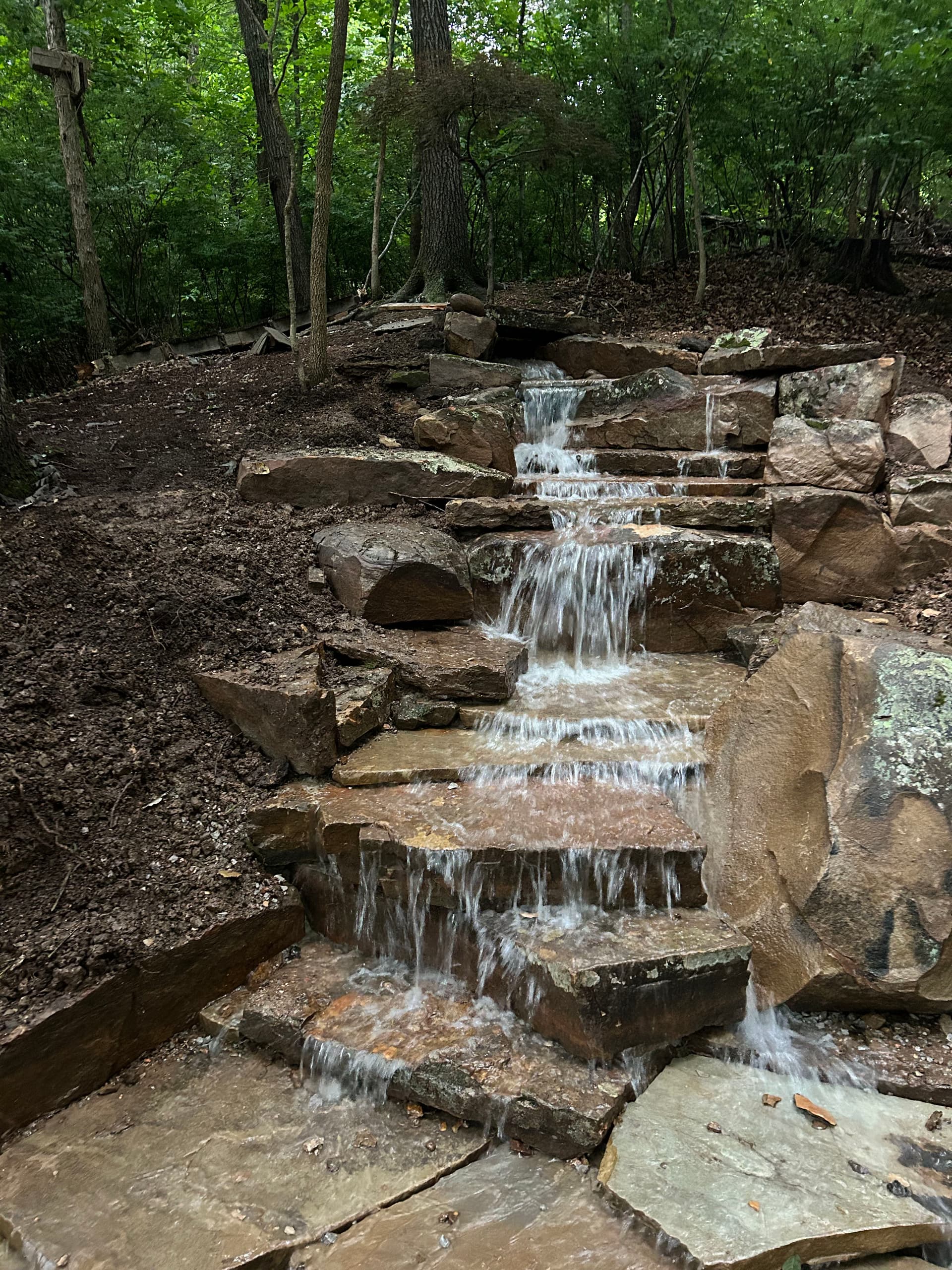
There's a version of a water feature that looks like it was ordered out of a catalog - perfectly symmetrical, a little plastic, kind of forgettable. And then there's this. When the goal is to make something feel like it grew out of the ground on its own, the material choices matter more than almost anything else.
We used Arkansas native stone on this one. That's not just a preference thing - it's intentional. Local stone already has the color tones, the texture, and the weathering patterns that match the surrounding landscape. It doesn't fight the environment. It works with it. That's how you get a waterfall that looks like it's been there for decades on day one.
Twenty-five tons of rock went into this build. That's not a small undertaking. Each layer has to be set with the right pitch and weight distribution so the water moves the way you want it to - not pooling in the wrong spots, not shooting off in odd directions. The stacking and placement is where the stone masonry craft really shows up. It's slow, deliberate work.
What we ended up with is a multi-tiered cascade that drops through several levels before it settles at the base. The sound alone is worth it. Water features like this have a way of changing how a whole outdoor space feels - quieter, cooler, more grounded. Especially in the middle of summer when everything else feels loud and hot.
If you've been sitting on the idea of adding a natural water feature to your property, the main thing people want to know is whether it'll actually look natural - or just look installed. That's the whole challenge, and it's one we take seriously on every build.